

How Are Your Sales Measuring Up to Other Agents?
By Melissa Dittmann Tracey
The housing market has endured more than three years of sluggish sales, with existing-home sales hovering just above 4 million annually—the slowest pace since 1995.
But even in one of the most challenging markets in decades, many agents who are REALTORS® are finding ways to grow their businesses, deepen client relationships and adapt their strategies.
The newly released National Association of REALTORS® “2026 Member Profile” offers a snapshot of how members are navigating today's market—from income and production to expenses, technology and referrals.
The report also raises an important question: How does your business measure up?
How Does Your Income Compare?
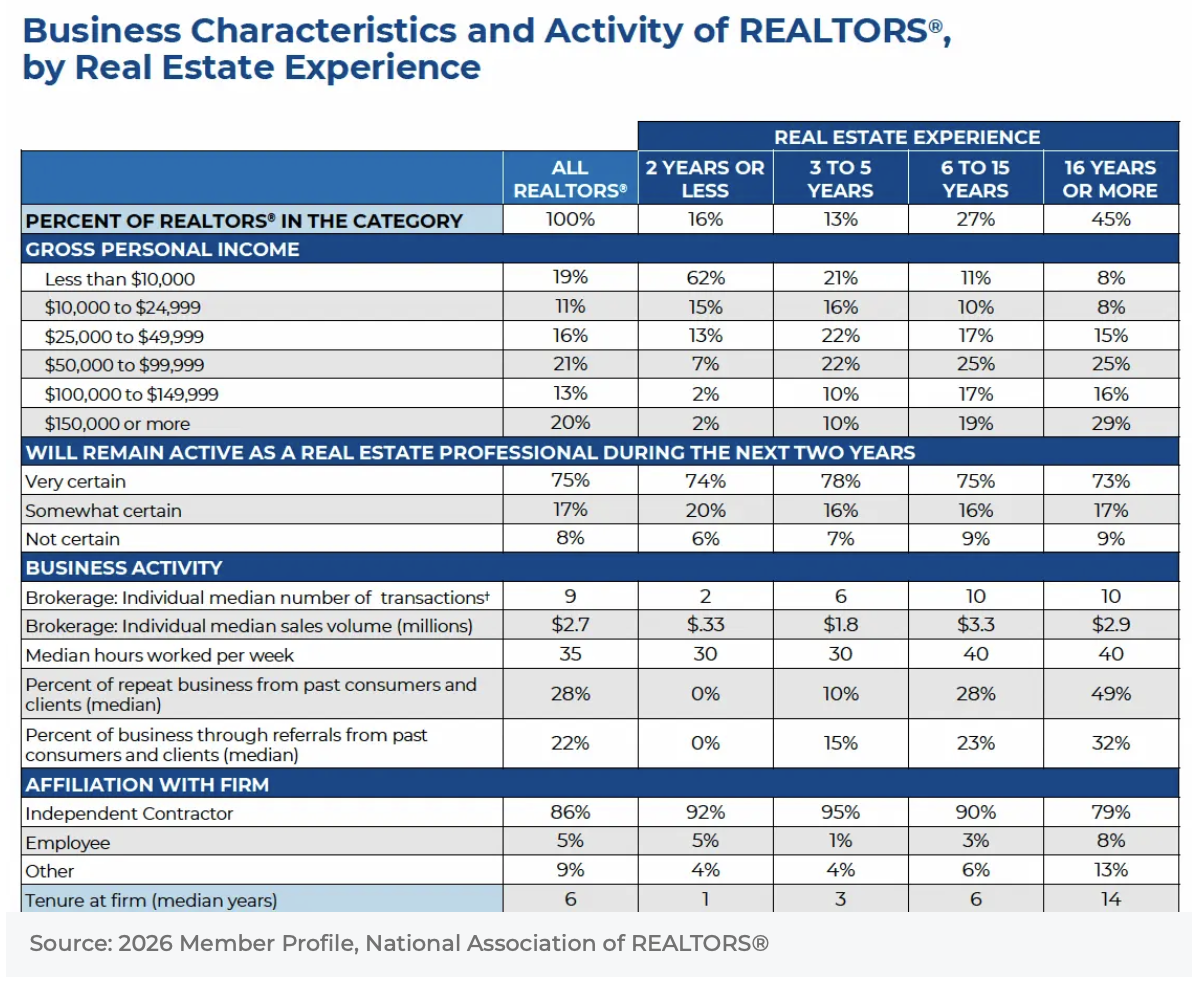
The median gross income for REALTORS® increased slightly in 2025, reaching $59,200 compared with $58,100 the previous year, the report shows.
Experience continues to make a significant difference. REALTORS® with 16 years or more in the business reported a median gross income of $88,500, up from $78,900 in 2024.
The numbers reinforce a common theme throughout the report: Building a real estate business takes time, consistency and a strong client base.
What Does Production Look Like Today?
The typical individual agent completed nine transaction sides in 2025.
Agents with six or more years of experience reported a median of 10 transaction sides and about $3 million in sales volume.
Twenty-one percent of REALTORS® reported being part of a real estate team in 2025, with the power in numbers showing up in higher production numbers. Team-based brokerage specialists—typically consisting of four members—reported a median of 32 transaction sides and $17.5 million in median sales volume. More than half closed at least $10 million or more in annual sales.
For many professionals, collaboration has become a strategy for growth.
Are You Diversifying Your Business?
Residential brokerage remains the primary focus for most REALTORS®, but many are expanding into additional specialties to create new revenue opportunities.
Common secondary business areas include:
- Relocation services
- Residential property management
- Commercial brokerage
- Land/development
- Homeownership consulting
- Commercial property management
- Appraisals
As market conditions shift, diversification may help professionals create additional income streams while broadening the services they offer clients.
How Much Are You Investing in Your Business?
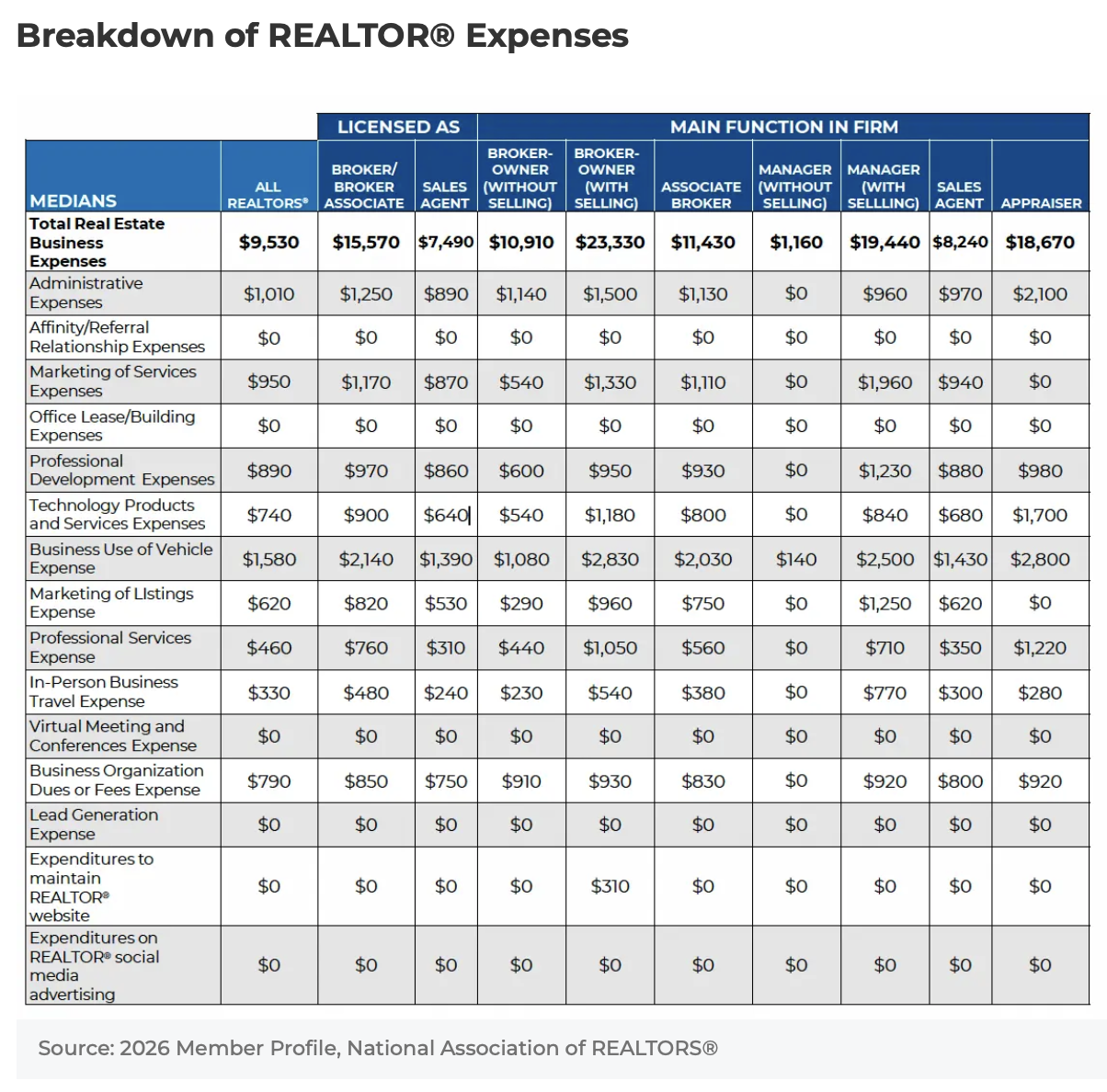
Running a real estate business requires investment. Median business expenses increased to $9,530 in 2025, up from $8,010 in 2024.
Vehicle expenses remained the largest business expense category, but agents are also investing in marketing, technology and tools designed to improve efficiency and client relationships.
The question for many professionals is not simply how much they’re spending, but whether those investments are paying off in growing their business.
Is Your Technology Strategy Keeping Up?
Technology continues to play an increasingly important role in running a successful real estate business. Most members regularly use MLS software, digital transaction management systems, e-signatures and CRM platforms to manage transactions, communicate with clients and generate leads.
REALTORS® also increasingly use social media professionally, most often leveraging:
- Facebook: 76%
- Instagram: 57%
- LinkedIn: 55%
- YouTube: 31%
- TikTok: 16%
While Facebook remains dominant, other social channels continue to present opportunities for agents looking to connect with consumers where they spend their time online. (Read more: Why Real Estate Pros May Not Want to Overlook TikTok)
Are You Leveraging Your Sphere?
The data also clearly shows how relationships remain one of an agent’s greatest assets.
The typical REALTOR® earned 28% of their business from past clients and customers in 2025, up from 20% the previous year. For REALTORS® with more than 16 years of experience, repeat business represented about half of their customer pipeline.
That trend highlights the importance of staying connected long after the transaction closes. In a market where buyers face affordability challenges and limited inventory, strong client relationships can provide a valuable competitive edge.
Is Experience Becoming Your Competitive Advantage?
The REALTOR® workforce is increasingly made up of experienced professionals with established businesses and deep client networks: The median years of experience among REALTORS® increased to 13 years in 2025, up from 12 years the previous year. About one-quarter of members have more than 25 years of experience, while professionals with less than one year in the business represent just 11% of membership.
The median age of a REALTOR® member is 57.
“What we are seeing is a more seasoned industry—professionals who are leaning on referrals, repeat clients and deep market knowledge to navigate one of the most challenging buyer environments in decades,” Jessica Lautz, NAR’s deputy chief economist, said in a statement about the report.